Understanding Flexible Schedules for Modern Workplaces
By Julie Caplan, Paychex –
December 4, 2024
aa3516490f99677e95ecff000037cd0d.png?sfvrsn=54ac713a_0 "Understanding Flexible Schedules for Modern Workplaces")
SPONSORED CONTENT
As the accounting profession looks to fill their talent pipeline, offering a flexible schedule can be an effective part of recruitment, employee engagement and retention.
A flexible schedule is intended to provide employees with more control over their work schedule so it can better fit their lifestyle. However, it doesn’t mean there is no structure or that they don’t have in-person attendance expectations.
Types of Flexible Schedules
- Working from home: Many workers find that working outside of a standard office environment allows them to focus better without the interruptions of an open office. Working from home may be an ideal fit in these scenarios. Some positions may be designed as 100% work-from-home opportunities, while others function best with hybrid scheduling. Employers should prioritize company culture and connection to help employees who work from home feel part of the team.
- Part-time employment: Many workers choose part-time employment to care for children or fulfill other responsibilities. Flexible work opportunities can provide even more support in these cases.
- Compressed workweeks: A compressed workweek means employees complete the same number of hours in fewer days. Working a four-day workweek, where work is completed in four 10-hour days, is becoming more common for professional roles.
- Flex time or flexible hours: With flex time, employees have flexibility in the timing of their work as long as they complete their expected number of hours. If an employee is asked to stay late or work an extra shift, for example, they can take an equivalent number of hours off later in the week.
- Asynchronous work: Asynchronous work allows employees to choose their own schedules, including start and end times, breaks and which days they work. This is often a good solution for companies with employees in different geographic locations who need to schedule meetings across time zones.
Advantages of Flexible Schedules
- For employees: Employees value flexible work schedules because they offer more freedom to design a schedule around their unique needs. Benefits include better work-life balance, enhanced productivity, reduced stress and greater job satisfaction. When employees have the flexibility to take time off or change their schedules, the likelihood of job-related stress decreases and job satisfaction increases. One study found that working at home increased job satisfaction by 65%, and working an alternative schedule boosted the likelihood of job satisfaction by 62%.
- For employers: Offering a flexible schedule allows employers to expand their talent search to include skilled workers in other locations and candidates who need to work from home for personal or family reasons. Employers could also see improved outcomes, including higher retention rates, enhanced productivity and reduced overhead costs.
Disadvantages of Flexible Schedules
- For employees: Not all employees enjoy working from home. They may feel increased pressure to be productive or feel like they are always on the clock. Blurring of work-life boundaries can quickly lead to employee burnout. Schedule flexibility can also create challenges for teams. When you aren’t sure when a team member will be in the office or on the clock, it can be harder to schedule meetings and get feedback.
- For employers: Some employees work better away from the office, but others don’t. When employees are struggling, they can’t do their best work and may not be as productive without the accountability of an office environment. Managers must be careful that employees working flexible schedules don’t become out of sight, out of mind. Maintaining communication, providing feedback and offering recognition when schedules vary require extra effort.
Trends in Flexible Scheduling
Flexible work opportunities have dramatically increased since 2020, and they are here to stay. Younger generations of workers already have increased expectations for flexible work opportunities, and the benefits for employee health and wellbeing are undeniable.
With strategic vision and practical policies and guidelines, employers can use flexible work to attract new talent, increase engagement and retain their best employees.
Julie Caplan is the marketing content program manager at Paychex. She can be reached at jcaplan@paychex.com. Paychex is an NJCPA member benefit provider. Learn more at paychex.com/accounting-professionals. Access the full article on flexible work at go.paychex.com/nj-flexwork.
Julie CaplanJulie Caplan is the marketing content program manager at Paychex. She can be reached at jcaplan@paychex.com. |
This article appeared in the Winter 2024/25 issue of New Jersey CPA magazine. Read the full issue.
PAGE HEADING
-
Posted: Oct 8, 2026
Source: New Jersey Division of Taxation
-

Posted: Oct 8, 2026
Source: ROI-NJ
-

Posted: Oct 8, 2026
Source: Journal of Accountancy
-
513b18490f99677e95ecff000037cd0d.jpg?sfvrsn=cf96713a_0)
Posted: Oct 1, 2026
Source: The Tax Adviser
-

Posted: Sep 29, 2026
Produced annually by Blue J and CPA.com, a new report shows the shifting dynamic in how accounting professionals are increasing their use of AI-powered tax research. It also includes a few surprises for skeptics.
-

Posted: Sep 29, 2026
College is a significant investment, and career readiness and professional skills are “difference makers” in successful entry-level pursuits. Learn how organizations and higher education are addressing concerns and what more can be done.
-

Posted: Sep 25, 2026
Source: Governmental Accounting Standards Board
-

Posted: Sep 25, 2026
Source: NJ.com
-

Posted: Sep 25, 2026
Source: Journal of Accountancy
-

Posted: Sep 24, 2026
Source: Journal of Accountancy
-
Posted: Sep 24, 2026
Source: Financial Accounting Standards Board
-

-
Posted: Sep 22, 2026
The NJCPA has updated its updated Disaster Recovery Guide that provides a list of emergency state and federal contacts, insurance websites and phone numbers throughout New Jersey and the Metropolitan area.
-

Posted: Sep 22, 2026
Source: CFO Dive
-

Posted: Sep 21, 2026
Records help people prove their disaster-related losses. More accurately estimated losses, in turn, can help people receive more recovery assistance like loans or grants.
-

Posted: Sep 21, 2026
It's important to remember that if you suffered property damage as the result of a disaster this year, you may be able to amend last year’s tax return. This could reduce the tax for that year.
-

Posted: Sep 21, 2026
Although New Jersey is a gross income tax state, losses may be federally deductible. Learn what is and is not deductible and how to claim a deduction on one's tax return.
-

Posted: Sep 21, 2026
Scam artists often follow in the wake of disasters to prey on vulnerable victims. Here are some considerations to think about to avoid being taken advantage of.
-

Posted: Sep 21, 2026
Taking full advantage of insurance coverage often means documenting and knowing specific items and their value in advance of any disaster.
-
Posted: Sep 21, 2026
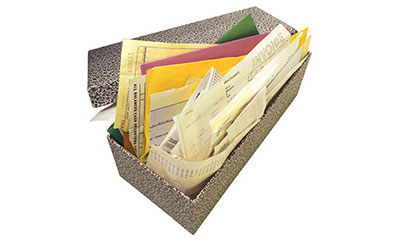
Replacing personal documents, such as driver's license, social security card, credit and ATM cards, insurance cards, marriage certificates and car titles, can be extremely challenging when a disaster strikes. A careful review is needed.
Earn a Specialty Certificate
When you’re ready to show your competencies, expand your career opportunities or enter new areas of practice, start by earning a specialty certificate from one of our learning partners.
Knowledge Hubs
Stay on top of the rapidly changing profession with ready access to knowledge, news and trends in the areas you need. We’ve compiled a wealth of resources designed to deepen your expertise.
8am CPACharge
8am CPACharge was developed specifically for CPAs, enrolled agents and accountants, providing a simple, affordable online payment solution that allows you to securely accept credit, debit, and eCheck/ACH payments from anywhere.
On-Site Training
NJCPA on-site training programs offer the same outstanding content
and expert instruction as our seminars but are led at your location.
Join the Accounting Educators Community
Connect and share with other accounting educators about curriculum, trends and the profession. Learn about NJCPA initiatives that are valuable for your students including information on obtaining the CPA designation, student membership, scholarships, volunteer opportunities and events.
Guaranteed Rate/Marc Demetriou
Marc Demetriou of Guaranteed Rate is offering NJCPA members a “no lender fee mortgage” ($1,440 lender fee credit), competitive low rates and a dedicated team to deliver world class service.
Join the Women's Leadership Forum
Join our online forum that enables female CPAs at all career levels and industries to make meaningful connections with each other and discuss career goals.
Wolters Kluwer
NJCPA members save 25 percent on CCH CPELink subscriptions, live webinars and on-demand self-study (mobile friendly) CPE courses.
SMI
SMI has negotiated special discounts for the NJCPA members with all the major technology carriers and providers.
Shop the NJCPA store
Are you NJCPA proud? Purchase NJCPA merch to show your pride and help support our scholarship program.
Join the Cannabis Interest Group
New Jerseyans have voted to legalize cannabis. Join the NJCPA's Cannabis Interest Group to gain information, insights and best practices for serving clients in this promising new industry.
Find a CPA
Locate a CPA near you for expert help with tax preparation and managing the financial health of your business.
Career and Business
Get tools and guidance to grow your career and further your organization’s success.
Community
Connect with CPAs in New Jersey and beyond who have similar interests, challenges and opportunities as you.
Expertise
Increase your technical competence and leadership skills with cutting edge information and training.
Find a Peer Reviewer
Search our Peer Review Directory to locate a firm to perform your peer review under the AICPA Peer Review Program.